Product guides
Ghassoul Clay Wholesale: A Practical Guide for Spas and Brands
2026-10-08 · 6 min · Moroccan Hammam Products team, Agadir
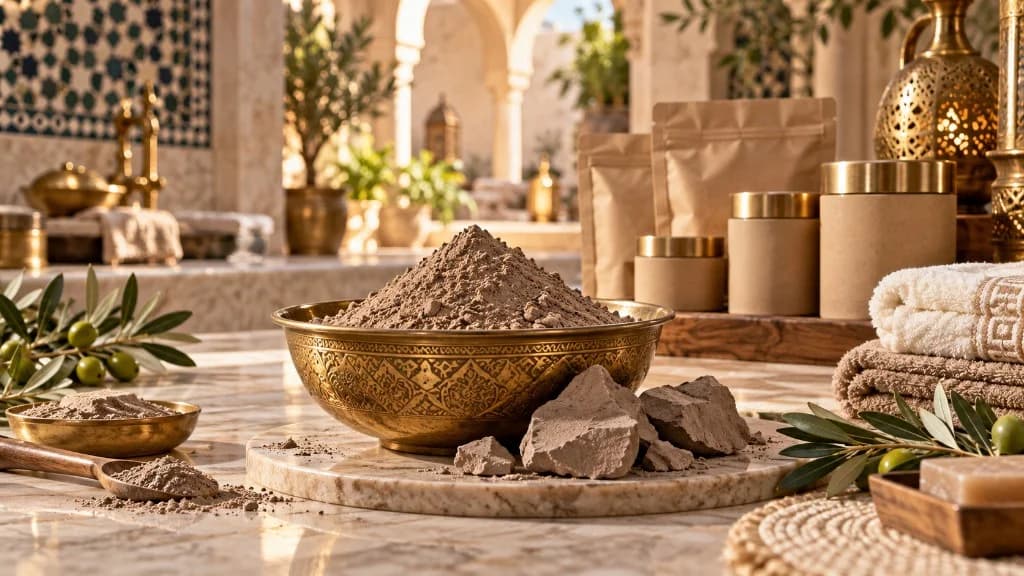
Ghassoul is the step clients feel most on the skin after the hammam: soft, clean, not tight. It is also one of the easiest products to get wrong when buying in bulk, because poor clay looks almost the same as good clay until you mix it.
Ghassoul or rhassoul?
Same clay. The Arabic word comes from the verb "to wash". In French and English it is written ghassoul, rhassoul or rassoul. Use both spellings on your product pages, because customers search for both.
Where it comes from
Ghassoul is a natural clay mined in the Middle Atlas mountains of Morocco, around the Moulouya valley. Morocco is the only commercial source. After mining, the raw clay is washed, dried in the sun and broken or ground. Traditional households also macerate it with herbs (lavender, chamomile, myrtle, rose) before drying, which gives the "seven-herb" ghassoul sold in souks.
Forms you can buy
| Form | Pros | Cons | Best for |
|---|---|---|---|
| Raw pieces | Traditional, authentic look | Must soak before use | Retail, souvenir |
| Fine powder | Fast to mix, consistent | Dusty when handling bulk | Spas, private label |
| Ready paste (with rose water) | No preparation | Shorter shelf life, heavier to ship | Retail, hotel amenities |
| Herbal blend | Scent and story | Variable from batch to batch | Gift sets |
How to judge quality
- Texture: fine powder should feel silky. Gritty bits mean poor sieving or sand.
- Color: grey-brown to reddish-brown. Color varies naturally by deposit, but it should not vary wildly within one order.
- Mixing: good clay absorbs water and turns into a smooth, creamy paste in a minute or two.
- Smell: earthy and clean. A musty smell can mean it was stored damp.
- Microbiology: clay is a natural material. For cosmetics, ask for a microbiological test per batch; it is a fair, standard request.
How to prepare it
- Body wrap: 2 to 3 tablespoons of powder (about 50 to 80 g) with rose water to a yogurt-like paste.
- Face mask: 1 tablespoon with rose or orange blossom water; leave 5 to 10 minutes; do not let it dry completely.
- Hair wash: 2 tablespoons in warm water as a no-foam shampoo; rinse well.
- Use wooden, glass or ceramic bowls; avoid metal for long contact, as many traditional users do.
Ghassoul vs other clays
Ghassoul is valued for being gentle and soft on skin, while green clay is usually chosen for oilier skin and kaolin for very sensitive skin. Many brands sell ghassoul as the "Moroccan" clay in their range, next to one other clay type.
Buying mistakes
- Comparing prices without comparing sieve fineness.
- Buying ready paste for a spa; powder is cheaper and keeps longer.
- Storing open bags in a humid treatment room.
- Making therapeutic claims ("detoxes toxins", "cures acne") on labels; keep claims cosmetic: cleanses, softens, absorbs excess oil.
FAQ
- Dry and closed, 24 to 36 months. Once mixed with water, use it the same day.
- Clay is a mineral, so it cannot be "organic" in the farming sense. It can be listed as natural or as an approved ingredient in certified organic cosmetics.
- From X kg in 25 kg bags. <!-- Internal links: "hammam" → /blog/moroccan-hammam-treatment-steps-spa ; "rose water" → /benefits ; "private label" → /private-label ; "bulk ghassoul" → /contact -->
Related articles
Product guides
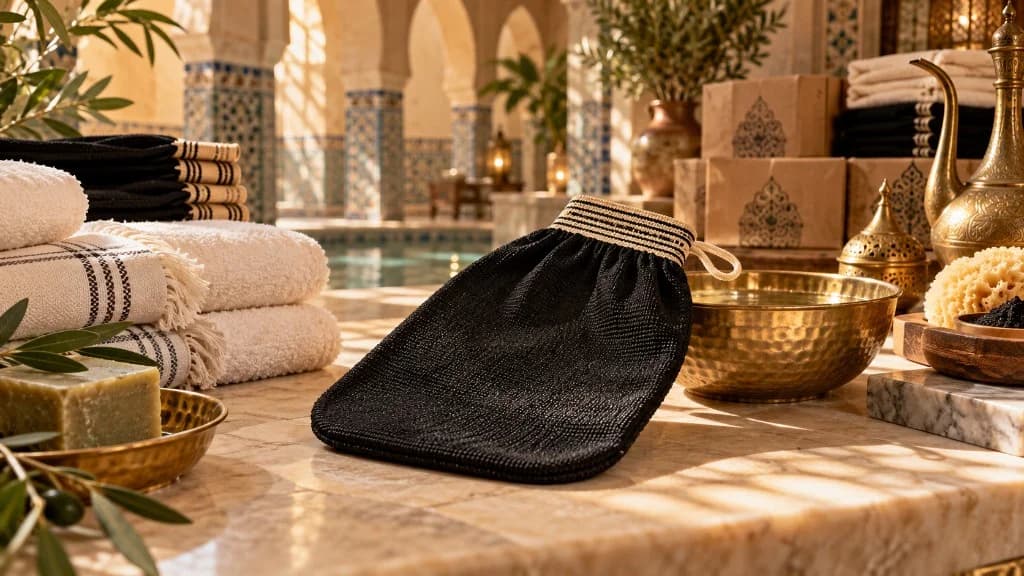
The Kessa Glove: A Buyer's Guide for Spas and Retailers
How to choose Moroccan kessa gloves for a spa or shop: fabric grades, sizes, how long they last, how to clean them, and what makes a cheap glove fail.
2026-10-08 · 5 min
Product guides
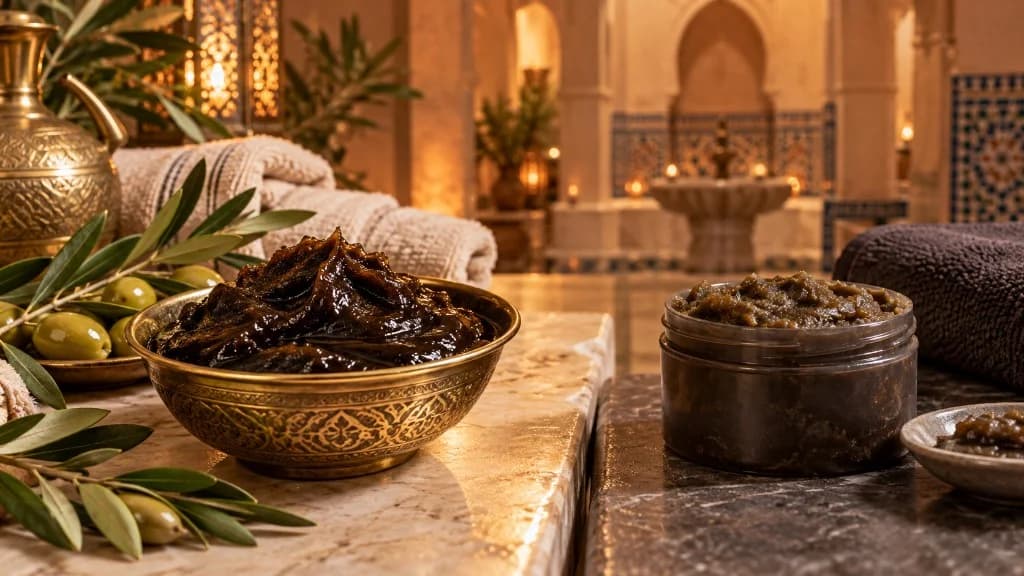
Moroccan Black Soap Wholesale: How to Tell Real Quality from a Cheap Copy
Not all beldi soap is equal. Learn how real Moroccan black soap is made, the 5 checks that reveal a cheap one, and which type suits spas or retail.
2026-10-08 · 6 min
Spa guides
Moroccan Hammam Treatment Steps: A Protocol Your Spa Can Use Tomorrow
A step-by-step Moroccan hammam protocol for spas: timings, product amounts per client, therapist tips, and the mistakes that make clients not come back.
2026-10-08 · 8 min